Creative work used to feel like something only humans could really do. Writing stories, designing visuals, making music, editing videos, shaping ideas from nothing. Now artificial intelligence sits inside those same spaces, generating images, drafting articles, and even suggesting design layouts. Sites like atechnewsdaily.com keep tracking how fast this shift is happening because it is not slowing down. The question people keep circling back to is simple but uncomfortable: Is AI taking over creative jobs? Not in a dramatic movie sense, but in the everyday sense where freelancers, designers, and writers start noticing machines doing parts of their work.
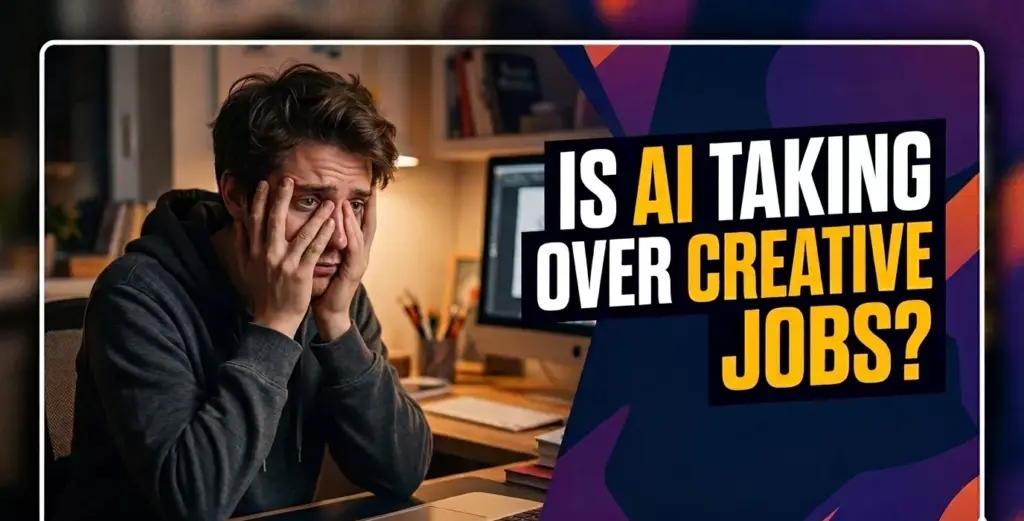
Before going deeper, it helps to understand what we are actually dealing with here. AI writing tools, graphic design AI, and AI automation systems are not replacing entire careers in one go. They are slipping into tasks inside those careers, piece by piece.
There is also a growing debate around tools and models, especially when comparing assistants like in this breakdown: claude vs gemini vs chatgpt which one is better?. People are not just asking about creativity anymore. They are trying to figure out which AI fits into creative workflows better.
Table of Contents
Is AI taking over creative jobs? The real situation behind the question
The phrase Is AI taking over creative jobs? gets asked a lot, but the answer is not as clean as yes or no. What is actually happening feels slower and more uneven.
AI and creative jobs are now tightly connected, especially in writing, design, and media. But instead of replacing entire roles, AI automation is reshaping tasks inside those roles.
For example:
- Writers use AI generated content for drafts
- Designers rely on graphic design AI for quick concepts
- Marketers use AI writing tools for ad variations
- Editors use machine learning tools for sorting and tagging
This shift is already visible in the creative industry, but it is more like redistribution than replacement.
How AI and creative jobs started overlapping quietly
At first, artificial intelligence in creative work felt like a tool for convenience. Grammar checkers, auto-enhance filters, and basic design templates. Nothing serious.
Now things feel different. AI generated content can write full blog posts. AI in media can edit videos automatically. Digital artists use AI tools for creators to generate backgrounds or test concepts. Even content creators who never touched automation in jobs before are now using it daily.
This overlap is why the question Is AI taking over creative jobs? keeps coming up. The boundary between human work and machine assistance is not clear anymore. Also Read: How to Connect Bluetooth Device to any TV? Complete Guide
Where AI fits inside the creative industry today
The creative industry has always changed with tools. Cameras replaced manual illustration in some areas. Software replaced physical editing. Now artificial intelligence is becoming the next layer.
Here is how it currently spreads across different roles:
| Role | AI impact today |
| Writers | Drafting + editing support |
| Designers | Layout + concept generation |
| Video editors | Auto-cut + enhancement |
| Marketers | Copy + campaign ideas |
| Artists | Style generation tools |
AI and creative jobs are now mixed at almost every stage of production.
Still, most professionals are not fully replaced. They are assisted. That difference matters more than people usually admit.
AI generated content vs human creativity
One of the biggest debates in the creative world is AI generated content vs human creativity comparison.
AI generated content is fast. It can produce multiple variations in seconds. It does not get tired or blocked. But it also tends to repeat patterns. Sometimes it feels like it is rearranging existing ideas instead of creating something emotionally new.
Human creativity is slower. It gets stuck. It drifts. It changes direction halfway. But that mess often produces originality that machine learning systems still struggle to replicate. Creative professionals often describe it like this:
| AI content | Human creativity |
| Fast output | Slow thinking |
| Pattern-based | Experience-based |
| Consistent tone | Emotional variation |
| Scalable | Unpredictable ideas |
This is where the real tension sits in Is AI taking over creative jobs? discussions. It is not just about output. It is about depth.
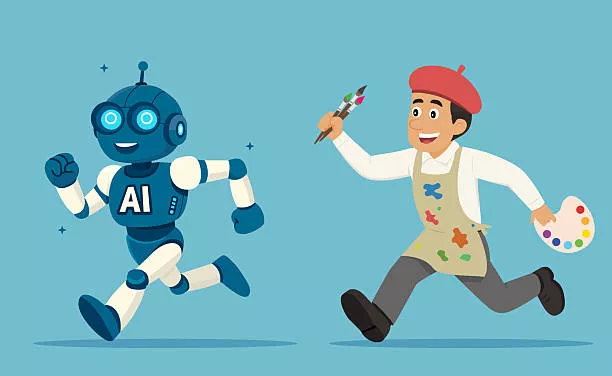
Creative professionals are adapting, not disappearing
There is a common assumption that automation in jobs leads directly to job loss. That is not fully happening in the creative space yet.
Instead, creative professionals are shifting roles. Writers now edit AI drafts instead of writing everything from scratch. Designers refine AI-generated layouts. Editors clean up machine-assisted video cuts. Even freelancers who once avoided technology now rely on AI tools for creators just to keep up with deadlines.
This change is subtle but important. It shows how AI and creative jobs are merging rather than replacing each other instantly. Some freelancers even say their workload increased, not decreased, because clients expect more output now that AI speeds things up. Also Read: Grammarly vs QuillBot vs ChatGPT: best AI writing assistant?
Where AI feels like it is actually replacing work
There are areas where job displacement is noticeable, even if it is not total.
- Basic logo design gigs
- Simple blog writing tasks
- Stock content creation
- Entry-level copywriting
- Repetitive social media posts
In these cases, AI automation reduces the need for large teams or multiple freelancers.
But higher-level creative work still depends heavily on human input. Concept development, storytelling, brand identity, and emotional design still rely on people.
So when people ask Is AI taking over creative jobs?, the honest answer is that it is taking over parts of tasks, not entire creative careers.
How AI is changing creative careers in 2026
The future of work in creative fields already looks different from a few years ago.
Some changes are easy to notice:
- Faster production cycles
- Higher content expectations
- More competition in freelance markets
- Increased use of AI writing tools
- Wider adoption of AI tools for creators
The impact of AI tools on creative professionals and freelancers is not just technical. It is also psychological. Many creators feel pressure to produce more because AI reduces the time barrier.
At the same time, new creative roles are forming. Prompt designers, AI editors, and hybrid content strategists are becoming more common.
Graphic design AI and the shift in visual work
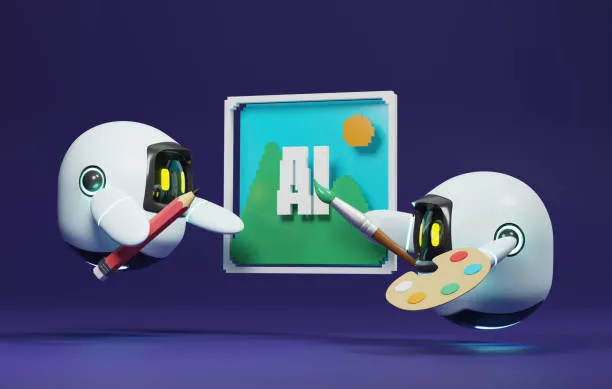
Graphic design AI is one of the most visible changes in the creative industry.
Simple design tasks that once took hours now take minutes. Templates generate layouts automatically. AI suggests color palettes. Some tools even create full branding concepts from prompts. But professional designers still say something similar: AI handles execution, not direction. The idea behind a design still matters. AI just speeds up the first draft. That balance shows up again in Is AI taking over creative jobs? debates. Speed is not the same as creative thinking. Also Read: Best AI tools for small businesses in 2026
AI in media and content production
AI in media is growing fast, especially in news summaries, video editing, and automated captions.
Media companies now use machine learning to:
- Sort content
- Generate summaries
- Edit clips automatically
- Tag images and videos
- Suggest headlines
This reduces manual workload, but it also changes job structures. Smaller teams can now produce more content.
That efficiency sounds good, but it also raises pressure on creative professionals to match machine-level output speed.
Why human creativity still matters more than people think
Even with all this technology, human creativity is still hard to replace in meaningful ways.
AI lacks lived experience. It does not understand cultural context deeply. It does not feel hesitation, curiosity, or emotional conflict in the same way humans do.
Those gaps show up in:
- Storytelling
- Branding decisions
- Emotional writing
- Cultural references
- Artistic expression
This is why many professionals still believe why human creativity is still important in the age of AI is not a theoretical question. It is practical. Without human direction, AI output often feels flat after a while.
Best ways creative workers are adapting
Creative workers are not ignoring AI. Most are adjusting slowly.
Some common approaches include:
- Using AI for rough drafts only
- Editing AI generated content heavily
- Mixing multiple tools for workflow automation
- Learning AI prompts for better control
- Focusing more on ideas than execution
These adjustments reflect a realistic answer to Is AI taking over creative jobs? It is not a takeover. It is a shift in how work gets done.
Advantages and disadvantages of AI in creative industries
Like most tools, AI brings mixed outcomes.
Advantages:
- Faster production
- Lower cost for basic tasks
- Easier experimentation
- More accessibility for beginners
Disadvantages:
- Risk of repetitive output
- Job pressure in entry-level roles
- Reduced originality in some content
- Overdependence on tools
The balance between these sides is still forming.
Final thoughts
The question Is AI taking over creative jobs? does not have a simple ending. What is happening feels more like reshaping than replacement. AI and creative jobs are now connected in almost every field writing, design, media, marketing, and digital art. Artificial intelligence handles speed and structure.
Humans still handle meaning and direction. The creative industry is not disappearing. It is changing shape. Some roles are shrinking, others are expanding, and many are just becoming hybrid versions of what they used to be. And maybe that is the part people are still getting used to: creativity did not move away from humans. It just started sharing space with machines.