
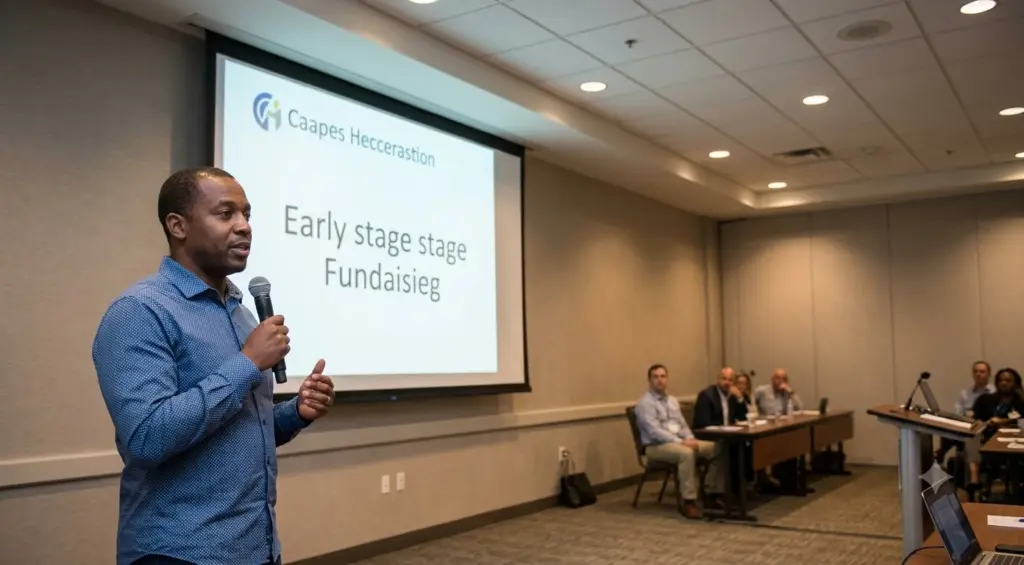
Talk to any founder trying to raise money this year. You’ll hear some version of “it’s different now” within about five minutes. Turns out they’re not wrong. Early stage fundraising with Charles Hudson that’s the frame for a conversation he had recently with TechCrunch’s Build Mode host, Isabelle Johannessen. Hudson runs Precursor Ventures. Been doing this over a decade, hundreds of investments deep. And he’s not shy about saying the old fundraising playbook is basically broken at this point.
Table of Contents
Why It Feels So Much Harder Now
Here’s the thing about early stage fundraising with Charles Hudson — a lot of it comes back to AI, and not in the way you’d expect. It’s not just “the market’s tighter.” The whole benchmark shifted underneath founders’ feet. You’re not getting compared to last year’s startups anymore. You’re getting compared to the fastest-growing AI companies that have ever existed. Which — yeah, kind of unfair when you sit with it. But apparently that’s just where things are. Startups doubling in size, tripling even — numbers that would’ve been a huge win two or three years back — are getting told by the market: good, not great. Rough thing to hear when you thought you were killing it.
The Big Valuation Isn’t Automatically a Win
Hudson pushes back on something a lot of founders assume by default. Sure, a splashy valuation gets headlines. Makes you look credible to other investors watching from the sidelines. But he’s clear — don’t chase the number just because it’s on the table. You’re locking in expectations you might not hit. You’re also locking in whoever’s now sitting on your cap table, for years, no matter what happens next.
This isn’t abstract either. Founders who raise oversized rounds can end up, as Hudson’s put it, a “prisoner” of their own company. You sold everyone a huge vision. Nobody’s taking the money back quietly if it doesn’t pan out — they want you to build something worthy of what they handed you. That’s heavier than most first-timers realize going in.
Do Your Homework on Investors Too
Something founders don’t hear enough, but it comes up naturally with Hudson: fundraising isn’t one-directional. Founders spend all this energy trying to look good for investors. Meanwhile Hudson’s telling them — go talk to that investor’s other portfolio founders first. Did the “we’ll help with recruiting” pitch actually happen for them? Or was it just something said in a meeting? VCs are courting founders as much as the reverse. Doesn’t always feel that way sitting across the table, but it’s true.

Sometimes VC Just Isn’t the Right Path
Maybe the most underrated piece of how Hudson thinks about this. Not every solid business needs to be venture-scale. He doesn’t soften this one. He’s described asking founders, point blank: here’s what venture capital is going to demand of you — set your actual company aside for a second, is this the kind of business you actually want to build? Uncomfortable question. Useful one too. A lot of founders chase VC money without ever really checking whether their business fits that kind of growth curve in the first place.
Storytelling Does More Work Than People Think
Once a raise gets moving, momentum carries a lot of it — and so does the pitch itself. Investors are flipping through decks fast. Founders who can compress their whole story into something tight and sticky have a real edge over the ones who ramble. Small point. Tactical. But it’s the kind of detail that actually decides outcomes when a raise gets competitive.
What’s Going On Behind the Curtain at Firms Like Precursor
None of this advice floats free of context. Precursor just closed fund five — $66 million — and Hudson’s been pretty open about the underlying math of seed investing shifting, maybe for good this time. LPs who used to sit patiently for seven, eight years are now asking about liquidity way earlier than they used to. Hudson’s own words: “seven or eight years feels like a really long time” to LPs right now, even though — his point exactly — it’s always been seven or eight years. The timeline didn’t change. People’s patience did.
That pressure filters down in ways founders mostly don’t see directly. Bigger funds deploying more money lean harder on algorithmic screening. Looking for, in Hudson’s words, “companies in these categories, with founders from these schools with these academic backgrounds who worked at these companies.” Efficient at scale. Also exactly the kind of filter that misses the unconventional founder Precursor’s whole reputation is built on backing.

Quick Recap
- AI reset the growth bar — pre-seed and seed rounds feel tougher even for founders posting strong numbers
- A big valuation isn’t automatically good news — think about the expectations and the cap table it locks in
- Vet investors the way they vet you — actually call other portfolio founders, don’t just take the pitch at face value
- Be honest with yourself about whether your business is built for venture-scale growth at all
- A tight, clear story beats a rambling one when investors are moving fast through dozens of decks
- LPs pushing for faster liquidity is quietly reshaping seed funds like Precursor — which changes the market founders are stepping into whether they clock it or not
Bottom line — early stage fundraising with Charles Hudson is really about watching assumptions collapse. On valuations. On growth benchmarks. On what founders should expect from the people funding them. The old rules didn’t bend a little here. Most of them just stopped applying.