

For most of the last few years, the AI playbook was pretty much the same everywhere you looked. Scrape the internet, pile it into a bigger model, watch the benchmarks go up. It worked, and it still works, up to a point. But Pim de Witte doesn’t think it works for everything, and he’s put real money behind that opinion.
De Witte runs General Intuition, a New York startup that spun out of the gaming platform Medal TV. His pitch, which he laid out recently on TechCrunch’s Equity podcast, is blunt: video games make better training data than the internet ever will, at least for the kind of intelligence that needs to understand the physical world. Not text. Not forum posts. Gameplay.
It sounds like a strange thing to build a company around until you sit with the logic for a minute. Also Read Why Are Companies Investing Billions in AI Infrastructure?
Table of Contents
Why Video Games Make Better Training Data Than Text
Why Text Falls Short
Language models are genuinely impressive at language. They can write, summarize, code, argue a point. What they’re bad at, still, is anything involving space and time in a physical sense. Ask a model what happens when a stack of crates gets bumped from one side, or how a car actually behaves mid-turn, and the wheels come off pretty fast. That’s because none of the text these models trained on was ever built to encode that kind of information in the first place. A paragraph about gravity is not the same thing as watching gravity happen.
This is basically de Witte’s whole argument in one sentence: video games make better training data because a game session is gravity, momentum, and cause and effect actually happening, over and over, generated by a real person making real decisions inside an environment that has to obey physical rules. Every jump. Every collision. Every clipped corner in a racing game. It’s all data about how objects move through space, recorded continuously instead of described after the fact.
The Source of the Data: How General Intuition Got Millions of Hours of Gameplay
General Intuition wasn’t originally trying to be an AI data company at all — that part came later, almost as a byproduct. Because it grew out of Medal TV, a platform built for gamers clipping and sharing their own footage, the company ended up sitting on millions of hours of real gameplay, recorded by actual players rather than generated in a lab for research purposes. That’s the raw material behind the company’s bet that video games make better training data for what people in the field now call “physical AI” — systems meant to operate in the real world, not just talk about it.
And investors clearly believe there’s something here. General Intuition closed a $320 million round at a $2.3 billion valuation, with names like Jeff Bezos, Coatue, and Eric Schmidt on the cap table, plus researchers with ties to MIT and DeepMind. That’s not pocket change chasing a hunch. It’s a fairly serious signal that people with a lot to lose think video games make better training data than the open web, at least for this particular problem.
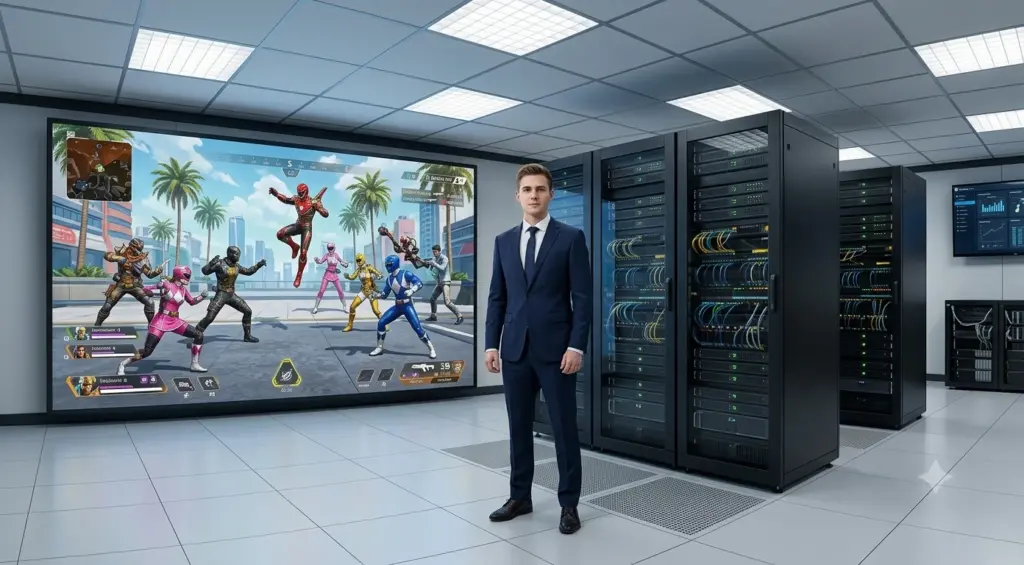
World Models: The Technology Behind the Claim That Video Games Make Better Training Data
The term General Intuition uses is “world model” — a system trained to guess what happens next in an environment, the same way a language model guesses the next word in a sentence. Except instead of learning grammar, a world model trained on gameplay has to learn things like object permanence and momentum just to make a decent prediction about the next frame.
That’s really the crux of why video games make better training data in de Witte’s view: a huge library of gameplay is, functionally, millions of hours of physics experiments that already come with intelligent human behavior baked in. Robots and autonomous systems need exactly that kind of intuition, and it turns out to be one of the hardest things to teach a model using text alone. Also Read How to Recover Deleted Photos on iphone and Android?
The Ethical Questions Behind Gaming Data and Physical AI
De Witte doesn’t dodge the uncomfortable follow-up either. A model that’s good at understanding movement, obstacles, and fast-changing physical situations is also, inconveniently, a model that’s useful for defense and robotics applications well outside of gaming. On the podcast he talked fairly openly about where he personally draws the ethical line for his own company, which is at least more candor than this topic usually gets.
That’s really why this conversation matters beyond one startup’s funding round. If video games really do make better training data than the internet for spatial reasoning, that changes what “training data” means going forward, and it drags along all the usual dual-use questions that seem to follow every serious advance in AI.

Final Verdict: Do Video Games Really Make Better Training Data?
Nobody knows yet whether General Intuition’s bet turns into the new standard or just an interesting detour. But the underlying complaint about text is hard to argue with: it has real limits when the goal is teaching a system about physical reality, and gameplay is a massive, largely unused pile of exactly the data that’s missing. Other researchers have poked at similar ideas using games to study reasoning and social behavior, but de Witte’s version is more pointed and a lot more commercial — a straightforward claim that video games make better training data for the next wave of AI than anything the internet has to offer. Also Read What’s the Best AI Search Optimization Tool for Marketers in 2026?
Whether it pays off comes down to one thing: can a model that learns physics from gameplay actually generalize the way de Witte thinks it can. Nobody has a final answer yet. But a $2.3 billion valuation says at least a few very well-resourced people are willing to bet yes.