
AI writing software stopped being a niche thing for tech people a while ago. Students use it for assignments, bloggers use it for drafts, marketers use it for ad copy, and office workers use it for emails they do not want to spend twenty minutes rewriting. Well, the competition keeps changing fast. All three overlap now. That is why people keep searching for comparisons like Grammarly vs QuillBot vs ChatGPT instead of using only one platform.
The difficult part now is not finding an AI writing assistant. It is figuring out which one actually fits the type of writing you do every day. Before comparing them properly, it helps to understand what these tools actually are.
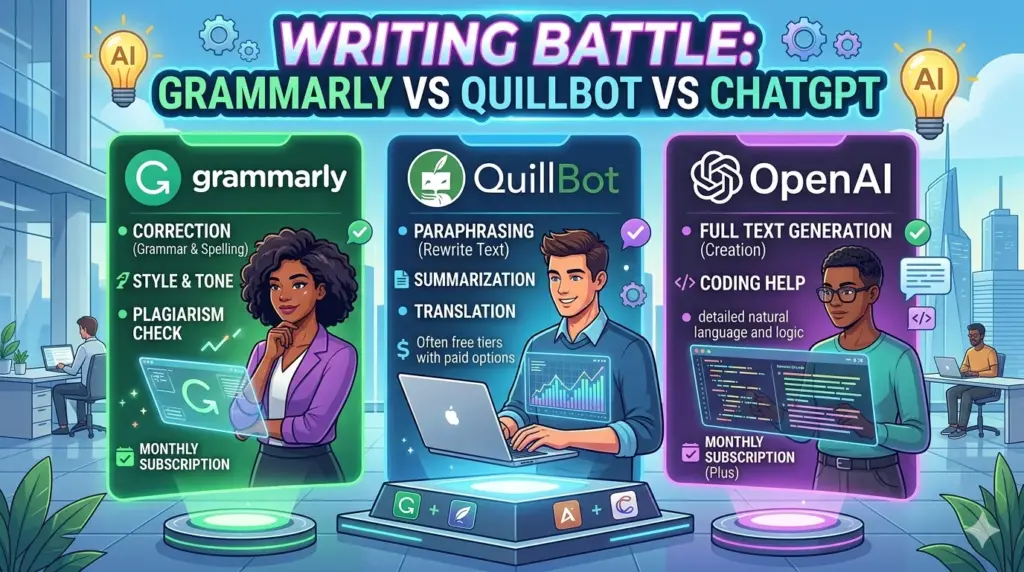
Grammarly started mainly as a grammar checker and editing platform. QuillBot became known as a paraphrasing tool focused on rewriting text in different styles. ChatGPT entered the space differently. It works more like an AI chatbot for writing, brainstorming, summarizing, and generating content from scratch. Also Read: ChatGPT Plus vs Gemini Advanced vs Claude Pro: Which Is Worth Paying For?
Table of Contents
Grammarly vs QuillBot vs ChatGPT for everyday writing work
People often expect one tool to handle everything. That usually leads to frustration because these platforms are built with different strengths.
The easiest way to explain it is this:
| Tool | Main Strength | Best For |
| Grammarly | Grammar correction and editing | Professional writing |
| QuillBot | Text rewriting and paraphrasing | Essays and rewrites |
| ChatGPT | AI content generation | Brainstorming and drafting |
The confusion happens because all three added overlapping features over time. Grammarly now suggests tone changes. QuillBot offers grammar correction. ChatGPT can rewrite paragraphs and proofread content too.
Still, their core behavior feels different after regular use.
Grammarly still feels strongest for editing clean writing
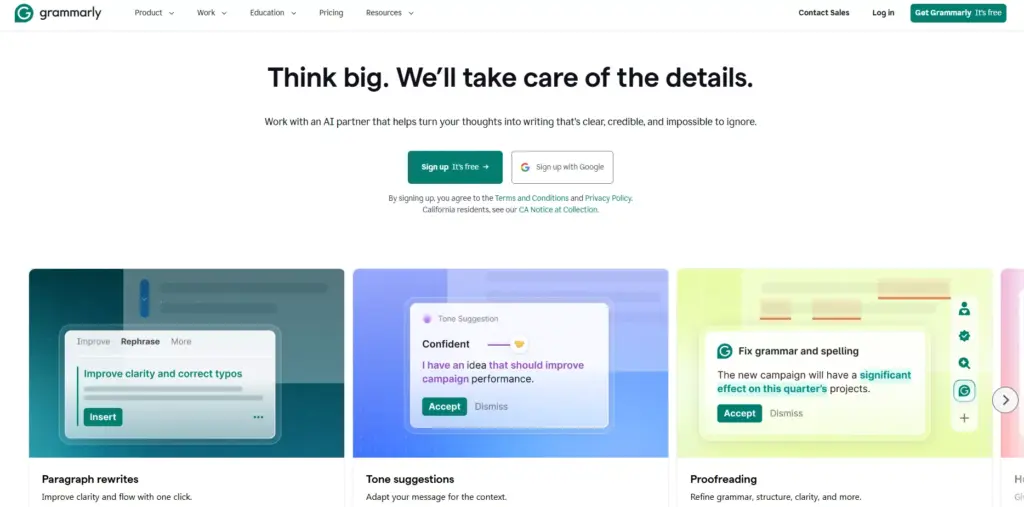
When people ask “What is Grammarly?” the simple answer is that it works like a real-time writing editor sitting beside your text.
It checks:
- Grammar mistakes
- Spelling issues
- Sentence clarity
- Tone suggestions
- Punctuation problems
Compared to newer AI writing tools, Grammarly feels less experimental. It focuses heavily on polishing existing writing rather than generating ideas from scratch.
That makes it popular among:
| User Type | Common Usage |
| Students | Essay proofreading |
| Bloggers | Grammar correction |
| Office workers | Email editing |
| Freelancers | Client communication |
A lot of writers still prefer Grammarly vs ChatGPT for professional editing because Grammarly catches smaller grammar details more consistently. ChatGPT can improve writing too, though it sometimes rewrites sentences so aggressively that the original tone disappears.
QuillBot became popular because rewriting is harder than people think
People usually underestimate how difficult paraphrasing can be. Rewriting content without sounding repetitive takes effort, especially for students, bloggers, and SEO writers working under deadlines.
That is where QuillBot built its reputation.
If someone asks “what is QuillBot and ChatGPT?” the biggest difference is purpose. QuillBot mainly focuses on restructuring existing text, while ChatGPT acts more like a general AI content generator. Also Read: How to use Notion AI to organize your entire life?
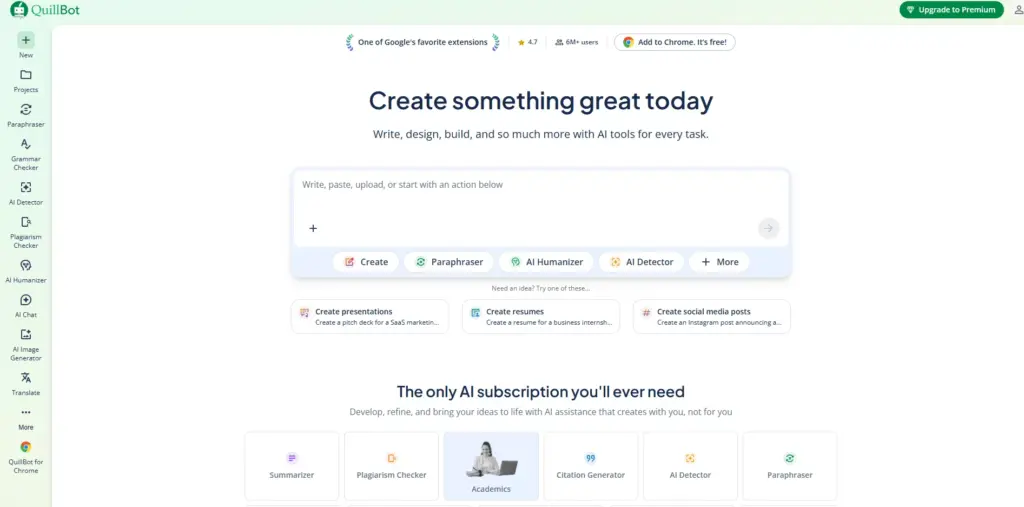
QuillBot offers modes for:
- Standard rewriting
- Fluency rewriting
- Formal tone
- Creative rewriting
- Shortening text
- Expanding content
Among AI writing assistant platforms, QuillBot feels more focused on sentence restructuring than full content creation. That is why QuillBot vs Grammarly comparisons happen often. One fixes writing. The other reshapes it.
ChatGPT changed expectations around AI writing
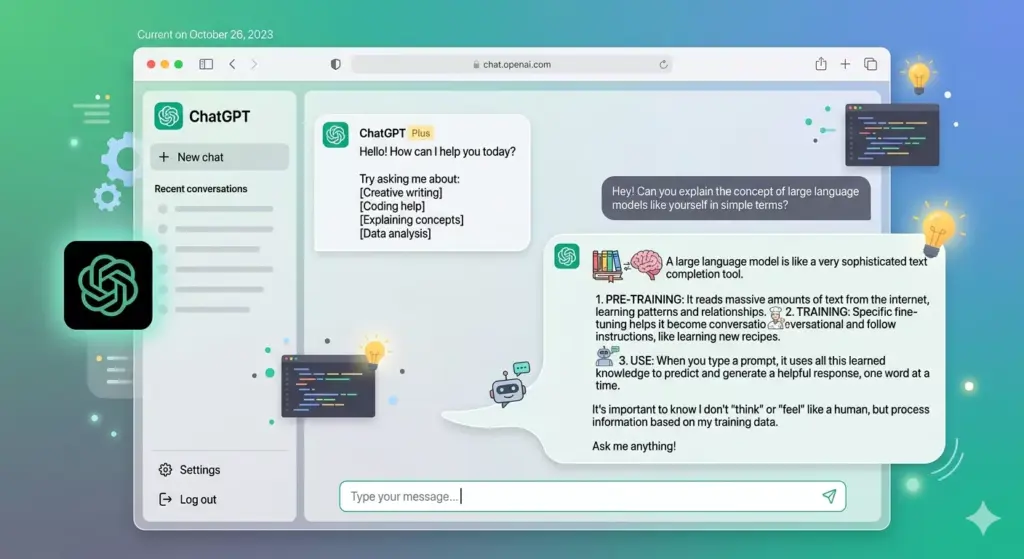
Before ChatGPT became widely used, most writing productivity tools focused on editing existing text. ChatGPT shifted attention toward idea generation and conversational writing.
People use the ChatGPT writing tool for:
| Writing Task | Typical Usage |
| Blog outlines | Content planning |
| Product descriptions | Ecommerce writing |
| Social captions | Marketing content |
| Research summaries | Quick understanding |
| Brainstorming | Topic generation |
It behaves less like a traditional grammar checker and more like a collaborative writing assistant.
That difference matters because ChatGPT works best when users interact with it conversationally instead of expecting one-click editing.
There are also constant comparisons between AI assistants now. Articles like claude vs gemini vs chatgpt which one is better? became popular because people realized these systems behave differently depending on writing style and workflow.
Grammarly vs ChatGPT feels like editing versus creating
- A simple way to understand Grammarly vs ChatGPT is this:
- Grammarly improves writing that already exists.
- ChatGPT helps create writing from almost nothing.
- That distinction changes how people use them daily.
For example:
| Scenario | Better Choice |
| Fixing grammar errors | Grammarly |
| Writing first drafts | ChatGPT |
| Professional emails | Grammarly |
| Brainstorming blog topics | ChatGPT |
| Tone correction | Grammarly |
| Content generation | ChatGPT |
Some writers actually combine both. They generate rough drafts inside ChatGPT, then polish everything using Grammarly afterward. That workflow became common among bloggers and freelance writers.
QuillBot still dominates paraphrasing tasks
QuillBot works especially well when people already have content but want different phrasing.
Students use it heavily for essay writing tools and paraphrasing assignments. Bloggers use it to restructure repetitive paragraphs. SEO writers use it to refresh outdated content.
The reason QuillBot vs ChatGPT comparisons keep growing is because ChatGPT can rewrite text too. The difference is consistency. QuillBot feels more focused during rewriting tasks. ChatGPT sometimes changes the meaning or tone too much unless prompts are very specific. Also Read: Best Password Managers for families in 2026
That makes QuillBot useful for:
- Essay rewriting
- Article paraphrasing
- Sentence restructuring
- Simplifying technical writing
- Shortening long content
For pure rewriting tasks, QuillBot often feels faster.
Pricing changes the conversation for many users
Features matter, but pricing changes which AI writing assistant people actually keep using long-term.
Here is a general comparison:
| Tool | Free Version | Paid Features |
| Grammarly | Limited corrections | Advanced editing |
| QuillBot | Basic paraphrasing | More modes and limits |
| ChatGPT | Basic AI access | Better models and tools |
Many casual users stay with free versions unless writing is directly tied to income or academic work. Students usually prioritize affordability. Content creators often care more about flexibility and speed. That is why Grammarly vs QuillBot vs ChatGPT features pricing and accuracy discussions keep appearing online. Different users value different things.
AI proofreading still feels strongest in Grammarly
Even with newer AI content generator systems appearing constantly, Grammarly remains one of the most reliable AI proofreading tools.
It catches:
- Awkward phrasing
- Passive voice
- Repeated words
- Missing punctuation
- Readability issues
The platform feels less creative than ChatGPT, though that is sometimes a benefit.
Professional writers often prefer predictable editing over dramatic rewriting. Among the best AI proofreading and editing tools for bloggers and students, Grammarly still holds a strong position because it focuses on refinement rather than experimentation.
ChatGPT works better for content creation than editing
Some people try using ChatGPT exactly like Grammarly and end up disappointed. The tool shines more during idea generation and drafting phases.
For example, the ChatGPT writing tool handles:
- Blog intros
- YouTube scripts
- Product copy
- SEO outlines
- Brainstorming
- Content expansion
That flexibility makes it one of the most widely used AI writing tools in 2026.
The downside is inconsistency. Some responses sound natural. Others sound repetitive or overly polished if prompts are weak.
Human editing still matters a lot.
SEO writers usually combine multiple tools
SEO writers rarely depend on only one platform anymore.
A common workflow looks like this:
| Step | Tool Used |
| Brainstorm ideas | ChatGPT |
| Rewrite sections | QuillBot |
| Final proofreading | Grammarly |
This combination works because each platform solves a different problem.
That is partly why discussions around the best AI writing assistant for SEO content creation in 2026 rarely produce one universal winner.
The writing process itself has different stages.
The experience changes depending on writing style
One thing people forget during comparisons is that writing style changes tool performance.
Someone writing academic essays may prefer:
- Grammarly for proofreading
- QuillBot for paraphrasing
- ChatGPT for explanations
A marketer writing ad copy may rely more heavily on AI content generator tools and copywriting tools. A blogger may want a balance between SEO writing assistant features and natural-sounding content. This is why “how ChatGPT compares to Grammarly and QuillBot for writing tasks” never has a single answer that fits everyone. Also Read: Best AI tools for small businesses in 2026
AI writing tools still need human judgment
Even the best platforms still produce awkward sentences sometimes. Grammar corrections can sound stiff. Paraphrased sentences occasionally lose meaning. AI-generated content can become repetitive fast. People expecting perfect automation usually end up frustrated. The better approach is treating these systems like assistants instead of replacements. That mindset changes everything.
Which tool feels best for students?
Students often compare essay writing tools based on affordability and simplicity.
Here is how many students describe them:
| Tool | Student Advantage |
| Grammarly | Grammar confidence |
| QuillBot | Easier paraphrasing |
| ChatGPT | Faster brainstorming |
QuillBot vs ChatGPT for paraphrasing essays and articles becomes a common debate because both can rewrite content. QuillBot tends to stay more structured, while ChatGPT offers broader explanations and examples.
Students working on research papers often combine all three platforms anyway.
Professional writers usually care about tone
- For professional communication, tone matters almost more than grammar.
- Grammarly premium vs ChatGPT for professional writing improvement becomes interesting because both approach tone differently.
- Grammarly gives controlled editing suggestions.
- ChatGPT rewrites more freely, sometimes sounding too polished or unnatural if prompts are vague.
- Writers who want small corrections usually prefer Grammarly. Writers wanting creative restructuring lean toward ChatGPT.
Choosing between them depends on what frustrates you most
People searching “how to choose between Grammarly QuillBot and ChatGPT for writing” are usually trying to solve one specific problem.
- If grammar mistakes slow you down, Grammarly probably helps most.
- If rewriting feels exhausting, QuillBot makes more sense.
- If blank pages are the issue, ChatGPT usually helps faster than either alternative.
- The decision becomes easier once people stop expecting one platform to handle every writing task perfectly.
Final thoughts
The debate around Grammarly vs QuillBot vs ChatGPT keeps growing because AI writing assistants are no longer limited to niche users. Students, bloggers, marketers, freelancers, and office workers all use these tools differently.
Grammarly still feels strongest for grammar checking and AI proofreading. QuillBot remains one of the easiest paraphrasing tools for restructuring text quickly. ChatGPT stands out for brainstorming, drafting, and flexible AI content generation.
None of them completely replaces human judgment. They mostly reduce friction during writing. For many people, the best setup is not choosing only one. It is combining the strengths of all three depending on the kind of writing that needs to get done.